Hydraulic home elevators
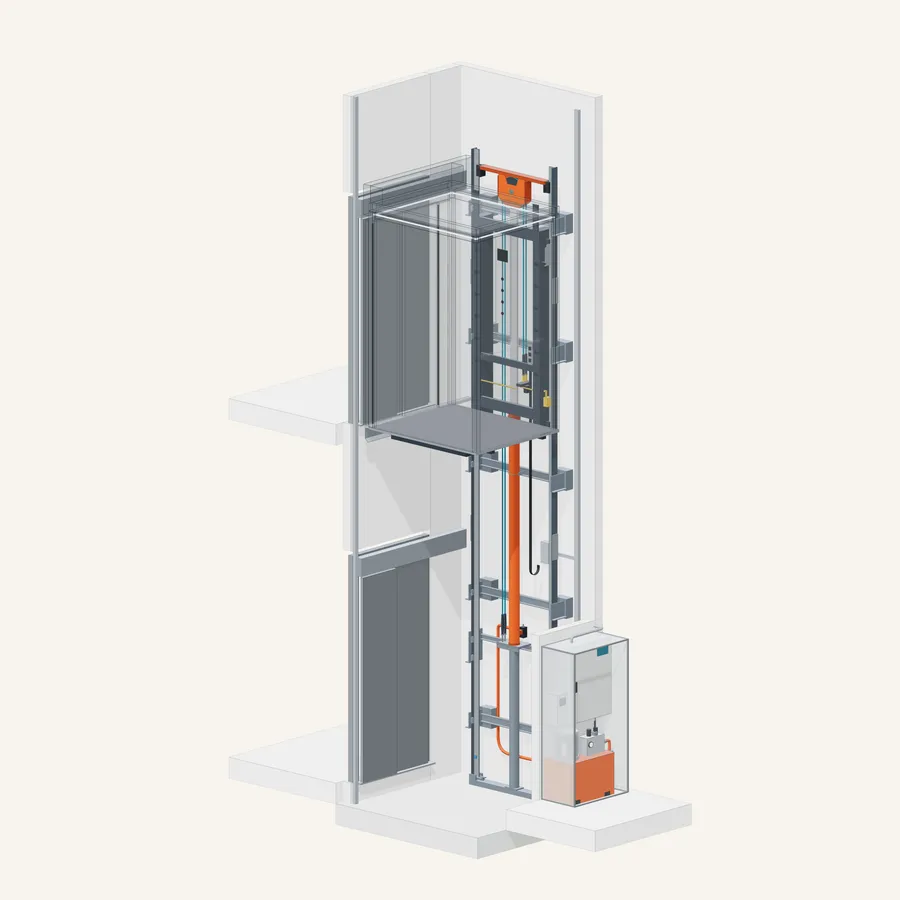
A hydraulic home elevator lifts the cab with oil. LussoLift hydraulic residential elevators serve two to four floors in homes across South and Central Florida, each one made to measure.
Complimentary consultation at home or by video call, then a written quote.
Our team: 20+ years235+ elevators installed
- Floors
- 2 to 4
- Pit
- Shallow
- Doors
- 1, 2 or 3 sides
- Machine room
- Small
Size of the pump and controls
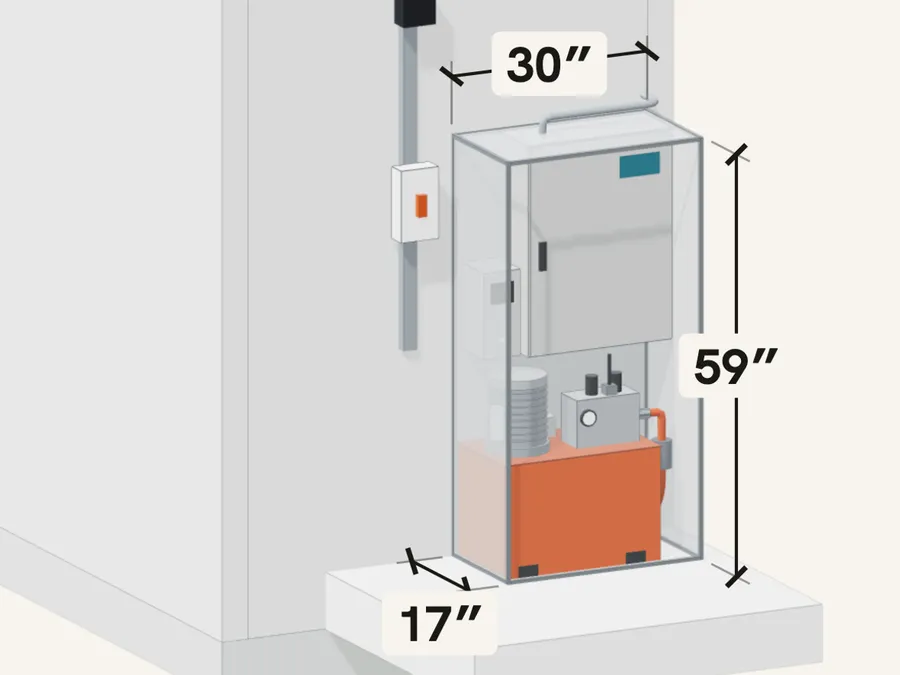
The pump, the oil tank and the controls share one steel cabinet next to the shaft. Keep about 28 inches clear in front of it for service.
| Width | Depth | Height | |
|---|---|---|---|
| Cabinet | 30 | 17 | 59 |
How a hydraulic home elevator works
Oil does the lifting
A small pump pushes oil into a steel cylinder.
The piston rises
As the cylinder fills, the oil pushes the piston up.
Ropes double the lift
Two steel ropes run over a pulley on top of the piston and down to the cab, so the cab rises twice as far as the piston.
Going down, the pump stays off
To go down, a valve opens and the weight of the cab pushes the oil back into the tank. The valve keeps the ride smooth.
Safety built in
A safety valve holds the cab in place. If a rope goes slack, safety brakes grip the rails and a switch shuts off the elevator.
Why choose hydraulic
The largest cab for the space
Hydraulic needs less room below and above the elevator, so the cab can be larger and taller. Its one extra need is a small machine room or cabinet beside the shaft.
A smooth ride, ready for outages
Oil lifts the cab at an easy pace, and guide rails keep it steady. In a power outage, battery backup brings you safely down.
Safety, comfort and service
Safety
Installed to the US residential elevator code, ASME A17.1, with UL-certified controls.
- Locked floor doors. Each one stays locked unless the cab is at that floor, and the controls notice if anyone tampers with a lock.
- A light barrier across each entrance. The cab will not move while anyone is in the doorway, and automatic doors reopen.
- Safety valve and safety brakes. The valve on the cylinder holds the cab in place, and the brakes grip the rails if a rope goes slack.
- Overload warning. If the cab carries too much, a light and a sound tell you, and the cab stays put until the load is lighter.
- Alarm button and phone. The phone runs on a landline or a cellular line, your choice.
- Emergency light. In a power outage, it keeps the cab lit, and the alarm and the phone keep working on battery.
Comfort
- Level with every floor. The cab corrects itself to stay flush with the floor, even with the doors open, so there is no step at the door.
- A home floor. The cab can return on its own to a floor you choose.
- A key switch, as an option. It keeps young children from using the elevator on their own.
Service
- Tested in your home. We test every elevator fully before you start using it.
- Routine service from inside the cab. Our technicians work from the cab and record each visit in the elevator’s logbook. A built-in fault log helps them find problems fast.
- An annual maintenance plan. We offer one as an option.
Cab and finishes
Glass, stainless steel, wood-look or painted walls, an LED ceiling, and floors and doors to match your home. See every option in our catalog, or ask for what it doesn’t show: we also work with materials you choose, from your own marble or wood floor to a taller cab and doors.
Get the full finishes catalog by email
Questions about hydraulic home elevators
Does a hydraulic home elevator need a machine room?
Yes, a small one. The pump, the oil tank and the controls go in a machine room as close to the shaft as possible, indoors and out of the weather. It can be a small room or a steel cabinet we supply, and it stays locked and holds only the elevator equipment. With our self-supporting structure outdoors, the machine room stays inside the house, close to the structure. At the consultation, we show you where it can go.
How big is the cabinet for the pump and the controls?
About 30 inches wide, 17 inches deep and 59 inches tall. It holds the pump, the oil tank and the controls, and needs about 28 inches of clear space in front for service. The exact size depends on the pump your elevator needs.
What happens to a hydraulic elevator in a power outage?
A hydraulic home elevator goes down to the lowest floor on battery backup and opens its doors. Even with no power and no battery, a technician can lower the cab by hand from the pump unit.
Is a hydraulic home elevator noisy?
Most of what you hear is the pump, and it runs only while the cab goes up. Measured about 3 feet from the pump, with no cabinet around it, it is about 65 decibels, close to a normal conversation. How much reaches your rooms depends on where the machine room is, the cabinet and a vibration damper, which we recommend. We plan that spot with you.
Will a wheelchair fit in a hydraulic home elevator?
Yes. We size the cab with room for a wheelchair.
How does Florida heat affect a hydraulic elevator?
A machine room in a Florida home can get hot. When we measure your home, we check the spot we choose for it. Where it runs hot, we add an oil cooler or a larger oil tank. Heat sensors also watch the pump motor and the oil. If either one gets too hot, the cab finishes its trip to a floor and waits there until both cool down.
What electrical work does my home need for a hydraulic elevator?
Your electrician provides and installs it, to the local code. The elevator needs a dedicated 230-volt single-phase circuit, with neutral and ground, fused at 20 amps and ending in a lockable two-pole fused disconnect next to the elevator controls, plus a separate 110-volt, 10-amp circuit for the cab light. The machine room and the pit each need a guarded light of at least 10 foot-candles, with its switch within 18 inches of the access. Your project’s drawings list every detail.
Plan your hydraulic home elevator
Tell us about your home. We design your elevator and have it built in Italy.