Traction home elevators
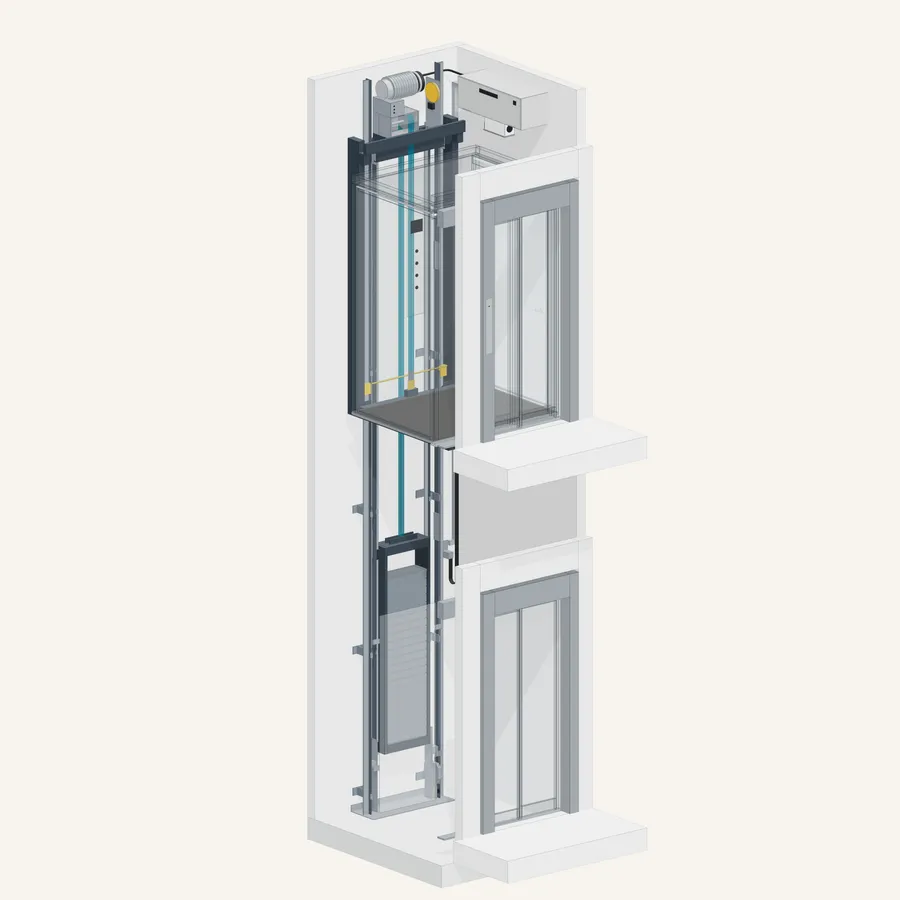
A traction home elevator is fully electric and moves the cab on steel ropes. LussoLift residential traction elevators serve two to four floors in homes across South and Central Florida, each one made to measure.
Complimentary consultation at home or by video call, then a written quote.
Our team: 20+ years235+ elevators installed
- Floors
- 2 to 4
- Pit
- Shallow
- Doors
- 1, 2 or 3 sides
- Machine room
- None
Size of the drive unit and controls
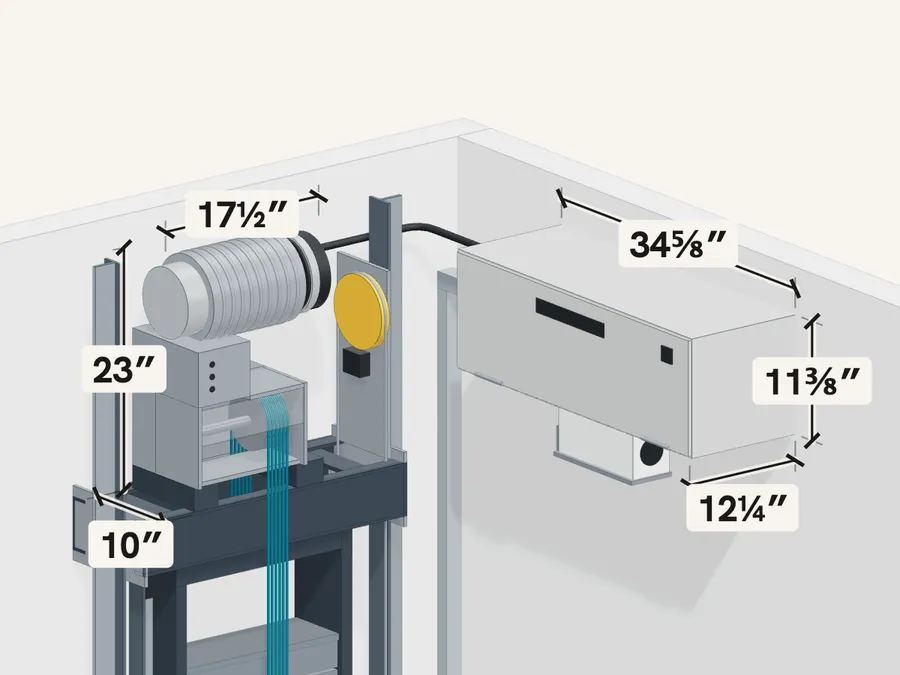
The drive unit bolts to the guide rails, and the controls usually hang on the shaft wall beside it.
| Width | Depth | Height | |
|---|---|---|---|
| Drive unit | 17 1/2 | 10 | 23 |
| Controls | 34 5/8 | 12 1/4 | 11 3/8 |
How a traction home elevator works
A motor turns a pulley
At the top of the shaft, a compact motor turns a grooved drive pulley.
Ropes link the cab and a counterweight
Steel ropes run over the pulley, with the cab hanging on one side and a steel counterweight on the other. The grip of the grooves lets the pulley move the ropes.
The cab goes up, the counterweight comes down
As the cab rises, the counterweight comes down the same distance on the other side. It balances the cab and part of the load, so the motor only moves the difference.
A brake holds the cab at the floor
At the floor, the motor comes to rest and springs close a brake on the drive. The brake holds the cab level with the floor even with the power off.
Safety built in
If the cab ever moves too fast, the speed limiter sets the safety brakes, which grip the rails and stop it.
Why choose traction
No machine room
The motor and brake fit at the top of the shaft, and the controls usually do too. No room of your home goes to machinery.
Quiet and efficient
The counterweight carries much of the load, so a compact electric motor moves the cab smoothly and with little effort.
Safety, comfort and service
Safety
Installed to the US residential elevator code, ASME A17.1, with UL-certified controls.
- Locked floor doors. Each door unlocks only when the cab arrives at its floor.
- A light barrier that tests itself. It guards each doorway, and the cab will not move while anyone is in the way. Automatic doors also reopen.
- A self-checking brake. If the brake or another key safety device reports a fault, the elevator stays stopped until a technician checks it and resets it.
- Overload and slack-rope sensors. The elevator will not run if the cab carries too much or a rope goes slack.
- Two ways to call for help. An alarm button sounds a siren, and an automatic phone dialer calls out on a landline or a cellular line, your choice.
- Emergency light. In a power outage, the cab’s own emergency light comes on.
Comfort
- Parks where you want it. The cab can wait at the floor you choose.
- Key access, as an option. A key switch can limit who uses the elevator, for homes with small children.
Service
- Help from outside the cab. If the cab ever stops between floors, a technician brings it to a floor from a small panel hidden in the top-floor door frame or the wall, without entering the shaft.
- Service that leaves your cab untouched. Technicians check the safety parts from the pit and test the safety brakes from that panel. Routine checks do not require removing the cab walls, and the controls keep a record of recent faults to guide them.
- Tested in your home. We test every elevator fully before you start using it.
- An annual maintenance plan. We offer one as an option.
Cab and finishes
Glass, stainless steel, wood-look or painted walls, an LED ceiling, and floors and doors to match your home. See every option in our catalog, or ask for what it doesn’t show: we also work with materials you choose, from your own marble or wood floor to a taller cab and doors.
Get the full finishes catalog by email
Questions about traction home elevators
What does machine-room-less (MRL) mean?
It means the elevator needs no machine room. Where the space above the cab is tight, its controls go in a small cabinet just outside the shaft.
What happens to a traction elevator in a power outage?
A traction home elevator goes down to the lowest floor on battery backup and opens its doors.
How quiet is a traction home elevator?
Very quiet. No pump switches on, and the drive is built to run so smoothly that you hardly hear it in the rooms next to the shaft.
Will a wheelchair fit in a traction home elevator?
Yes. We size the cab with room for a wheelchair.
How does Florida heat affect a traction elevator?
A traction elevator has no hydraulic oil to keep cool. A heat sensor watches the motor. If the motor ever runs too hot, the elevator pauses until the motor cools down. If the controls go outside the shaft, we place them under cover, out of the weather.
What electrical work does my home need for a traction elevator?
Your electrician provides and installs it, to the local code. The elevator needs a dedicated 230-volt single-phase circuit, with neutral and ground, fused at 20 amps and ending in a lockable two-pole fused disconnect next to the elevator controls, plus a separate 110-volt, 10-amp circuit for the cab light. The top of the shaft, where the machine is, and the pit each need a guarded light of at least 10 foot-candles, with its switch within 18 inches of the access hatch. Your project’s drawings list every detail.
Plan your traction home elevator
Tell us about your home. We design your elevator and have it built in Italy.